
Complete Guide to Electric Meter Types in the UK (2026)

Understanding the different electric meter types used across the UK matters for homeowners, landlords, businesses, and property managers. The type of electricity meter installed in your property affects how energy consumption is measured, how you are billed, and which tariffs you can access.

This guide explains the main electricity meter types UK property owners and managers are likely to encounter, how each type works, and how to choose the right option for your property or installation. Every claim in this guide is backed by a verified source.

UK trad image

What Is an Electricity Meter?

An electricity meter is a device used to measure the amount of electrical energy consumed by a circuit, distribution board, piece of equipment, or property. Energy consumption is typically measured in kilowatt-hours (kWh).

Electricity meters can be installed for a variety of purposes. Utility meters, supplied by electricity network operators and energy suppliers, are used for billing and are linked to a Meter Point Administration Number (MPAN). Sub-meters, on the other hand, are commonly used to monitor and allocate electricity usage within commercial, industrial, residential, and multi-occupancy buildings. Modern electricity meters are available in a range of formats and may include features such as digital displays, MID certification, pulse outputs, Modbus communications, and remote monitoring capabilities. The type of meter required depends on the application and the level of energy monitoring needed.

Types of Electricity Meters in the UK

The electricity meter types used in the UK generally fall into two broad categories: utility meters supplied and managed by energy suppliers, and sub-meters installed privately for energy monitoring, cost allocation, and tenant billing.

Utility Meter Types

Utility meters are connected to an MPAN (Meter Point Administration Number) and are used by energy suppliers for billing purposes. Common utility meter types include:

  • Standard single-rate meters
  • Smart meters
  • Prepayment meters
  • Economy 7 meters
  • Economy 10 meters
  • Radio Teleswitch Service (RTS) meters

Sub-Meter Types

Sub-meters are installed downstream of the main utility meter to measure electricity consumption for specific circuits, areas, equipment, or occupancies. They are available in a range of configurations, including:

Meter technologies

  • Direct connected meters
  • CT-operated meters
  • Rogowski coil meters

Compliance categories

  • MID-approved meters

Applications

  • Tenant billing meters
  • Prepayment meters

Tariff configurations

  • Single-rate meters
  • Multi-tariff meters
  • Economy 7 meters
  • Economy 10 meters

Communication and monitoring options

  • Pulse output meters
  • Modbus meters
  • M-Bus meters
  • Remote monitoring meters

Standard Single-Rate Meters

Standard Single-Rate Meters

Standard single-rate meters are among the most common types of electricity meter in the UK. They record all electricity consumption at a single unit rate, regardless of when it is used. Historically, many standard single-rate meters used analogue rotating dials, while modern versions typically feature digital displays that are easier to read.

Best for: Households with consistent electricity usage throughout the day, properties without off-peak heating, and customers who prefer simple billing.

Limitation: No access to cheaper off-peak tariffs and limited visibility of when electricity is being used.

Digital Electricity Meters

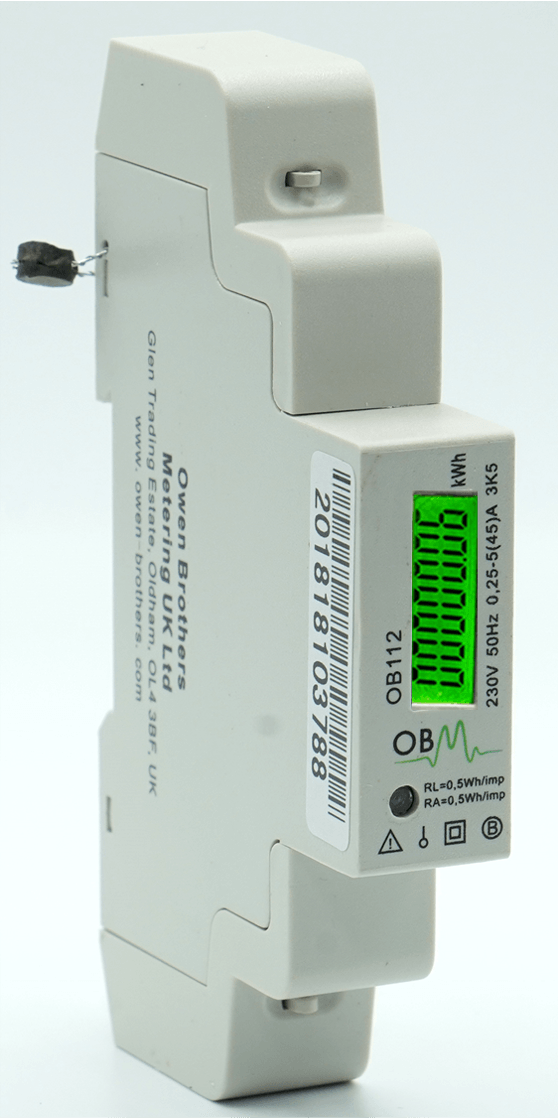
Digital electricity meters replaced many older analogue models and display readings on an LCD screen. They typically require manual readings to be submitted to the energy supplier, although they are generally easier to read and can offer greater accuracy than traditional dial meters. Many digital sub-meters are also available with MID approval, making them suitable for tenant billing and cost allocation applications. Depending on the model, they may also support pulse outputs, Modbus communications, or remote monitoring functions.

Best for: Homes upgrading from analogue meters, customers wanting clear, straightforward digital displays, and commercial properties requiring reliable energy monitoring.

Limitation: No automatic data transmission to suppliers in most cases.

Related Products — Digital Sub-Meters

→ Single Phase DIN Rail Meters
→ OB112 45A MID Approved DIN Rail Digital Meter
→ OB113-MOD 100A DIN Rail Bi-Directional Direct Digital Meter
→ Single Phase Meters in Enclosure

UK trad image

Smart Meters

Smart meters are now the standard being rolled out across Great Britain. Installed by energy suppliers on the main incoming electricity supply, they are linked to the property's MPAN (Meter Point Administration Number) and are used for supplier billing purposes. Unlike traditional meters, smart meters automatically send readings to suppliers, support half-hourly consumption data recording, and provide real-time usage information through an in-home display.

According to the UK Government's Q4 2025 Smart Meters Statistics Report, by the end of 2025 there were 41 million smart and advanced meters installed in homes and small businesses across Great Britain, representing 71% of all meters.

Best for: Homeowners wanting accurate billing, customers interested in time-of-use tariffs, and properties considering renewable energy integration.

Limitation: Communication issues can occur in some locations. Certain older SMETS1 models may temporarily lose smart functionality when switching supplier, although most have now been enrolled onto the central DCC network.

Note: Smart meters should not be confused with smart sub-meters or remote monitoring meters. While both can provide automated data collection, utility smart meters are installed and managed by energy suppliers, whereas sub-meters are installed privately to monitor electricity consumption beyond the main supply meter.

Prepayment Meters

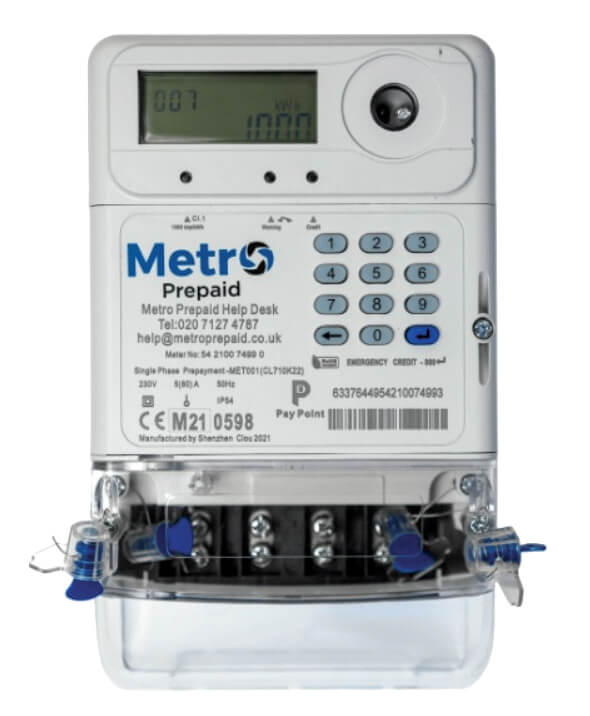
Prepayment meters require customers to pay for electricity before it is consumed, typically by adding credit via a key, card, mobile app, or online account. Utility prepayment meters are supplied and managed by energy suppliers, while prepayment sub-metering systems can also be installed privately to manage electricity usage in rented accommodation, holiday parks, marinas, student housing, and other multi-occupancy sites.

According to Ofgem's State of the Market Report (January 2026), there are approximately 6 million prepayment meter accounts in Great Britain.

Best for: Budget-conscious households, tenants wanting greater control over energy spending, and sites requiring electricity costs to be paid in advance.

Limitation: Prepayment customers may have access to fewer available tariffs than direct debit customers, and electricity costs can sometimes be higher depending on the supplier and tariff selected.

UK trad image

Economy 7 Meters

Economy 7 meters record daytime and overnight electricity consumption separately, allowing customers to access lower electricity rates during approximately seven off-peak hours each night. The exact off-peak period varies depending on the supplier and region.

Traditionally, Economy 7 required a dedicated dual-rate meter, although many modern smart meters can also support Economy 7 tariffs by recording consumption across multiple time periods.

Economy 7 meters typically display separate readings for peak and off-peak electricity usage, enabling suppliers to bill each rate accordingly.

Best for: Homes with storage heaters, electric water heating systems, electric vehicle charging, and customers able to shift a significant proportion of their electricity consumption to overnight periods.

Limitation: Daytime electricity rates are usually higher than standard single-rate tariffs, so savings depend on using enough electricity during the off-peak period.

Note: While Economy 7 is commonly associated with utility electricity meters, dual-rate and multi-tariff metering can also be used in private sub-metering systems for tenant billing, energy management, and cost allocation applications.

Economy 10 Meters

Economy 10 meters operate on the same principle as Economy 7 meters but provide approximately ten hours of off-peak electricity spread across multiple periods throughout the day and night. This can offer greater flexibility for properties that rely heavily on electric heating and hot water systems.

Economy 10 tariffs are less widely available than Economy 7 and are typically offered only by selected suppliers in certain regions of the UK.

Best for: Properties with extensive electric heating, storage heaters, or hot water systems that benefit from additional off-peak periods throughout the day.

Limitation: Less widely available than Economy 7, with fewer tariff options and more complex billing arrangements.

Radio Teleswitch Service (RTS) Meters - Phase Out Now Underway

RTS meters use a longwave radio signal to switch automatically between peak and off-peak electricity rates. They have historically been used in properties with electric storage heating and multi-rate tariffs such as Economy 7 and Economy 10.

According to Energy UK, approximately 154,000 RTS meters remained to be replaced as of January 2026, with the replacement programme continuing throughout 2026.

Once RTS support is withdrawn, affected meters may no longer switch correctly between tariff periods, which could impact heating schedules and electricity billing.

Ofgem has confirmed that smart meters are the long-term replacement for RTS meters. Energy suppliers are responsible for contacting affected customers and arranging suitable replacements.

Best for: Existing customers currently using RTS-controlled heating systems while awaiting replacement.

Limitation: RTS technology is being permanently phased out and is no longer suitable for new installations.

Electric Meter Types Comparison Table

Meter Type Auto Readings Multi-Tariff Support Status
Standard Single-Rate No No Active
Digital Meter No Usually No Active
Smart Meter Yes Yes Current Standard
Prepayment Meter Some Models Yes Active
Economy 7 Meter Some Models Yes Active
Economy 10 Meter Some Models Yes Active
RTS Meter No Yes Phasing Out

Note: Some categories overlap. For example, a smart meter may also operate as an Economy 7 meter or a prepayment meter. Similarly, many modern sub-meters can support multiple tariffs, remote communications, and automated meter reading functions.

Sub-Metering: The Option for Landlords and Commercial Properties

When discussing electricity meter types for multi-occupancy and commercial properties, sub-meters form a separate and important category. Installed downstream of the main utility meter, a sub-meter measures electricity consumption for a specific unit, tenancy, department, circuit, or area of a building. Unlike the main utility meter, which is used by the energy supplier for billing the property's overall electricity consumption, sub-meters enable landlords, property managers, and businesses to monitor, allocate, and recover energy costs more accurately.

Sub-meters are commonly used in:

  • HMOs and multi-occupancy residential properties
  • Commercial office buildings with multiple tenants
  • Industrial estates and business parks
  • Retail developments
  • Student accommodation
  • Holiday parks and caravan sites
  • Marinas and leisure facilities
  • Mixed-use developments combining residential and commercial space

Common applications include tenant billing, prepayment systems, energy management, cost allocation, and monitoring the performance of specific equipment or areas within a building.

UK trad image

Direct Connected and CT Operated Single Phase Meters

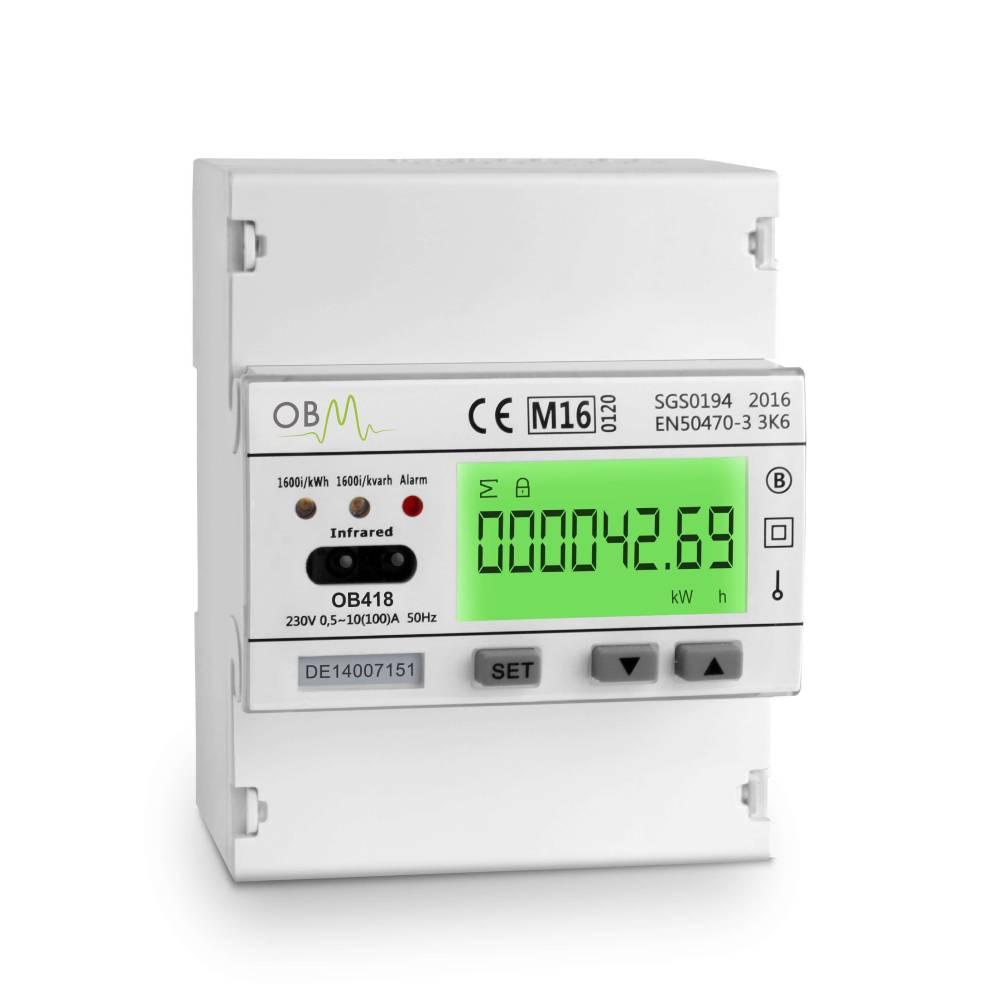
Direct connected single phase meters are suitable for smaller residential and light commercial installations, typically up to 100A. The full load current passes directly through the meter, making them a simple and cost-effective solution for standard sub-metering applications.

For applications where ease of installation is a priority, CT-operated single phase meters are also available. These use a current transformer to measure the load rather than passing the full circuit current through the meter, making them a popular choice for retrofit energy monitoring and tenant billing projects.

Related Products — Single Phase Sub-Meters

→ Browse All Single Phase Meters
→ Single Phase DIN Rail Meters
→ Single Phase Meters in Enclosure
→ OB112 45A MID Approved DIN Rail Digital Meter
→ OB418 100A Single Phase MID Meter in IP66 Enclosure

CT Operated Three Phase Meters

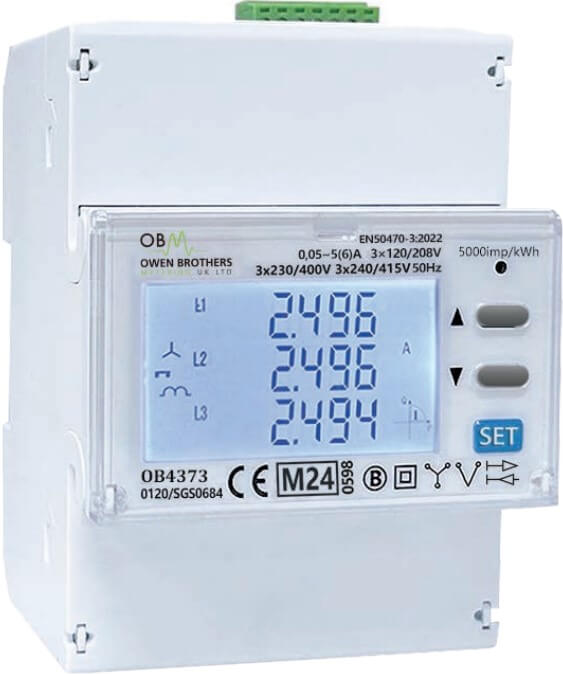
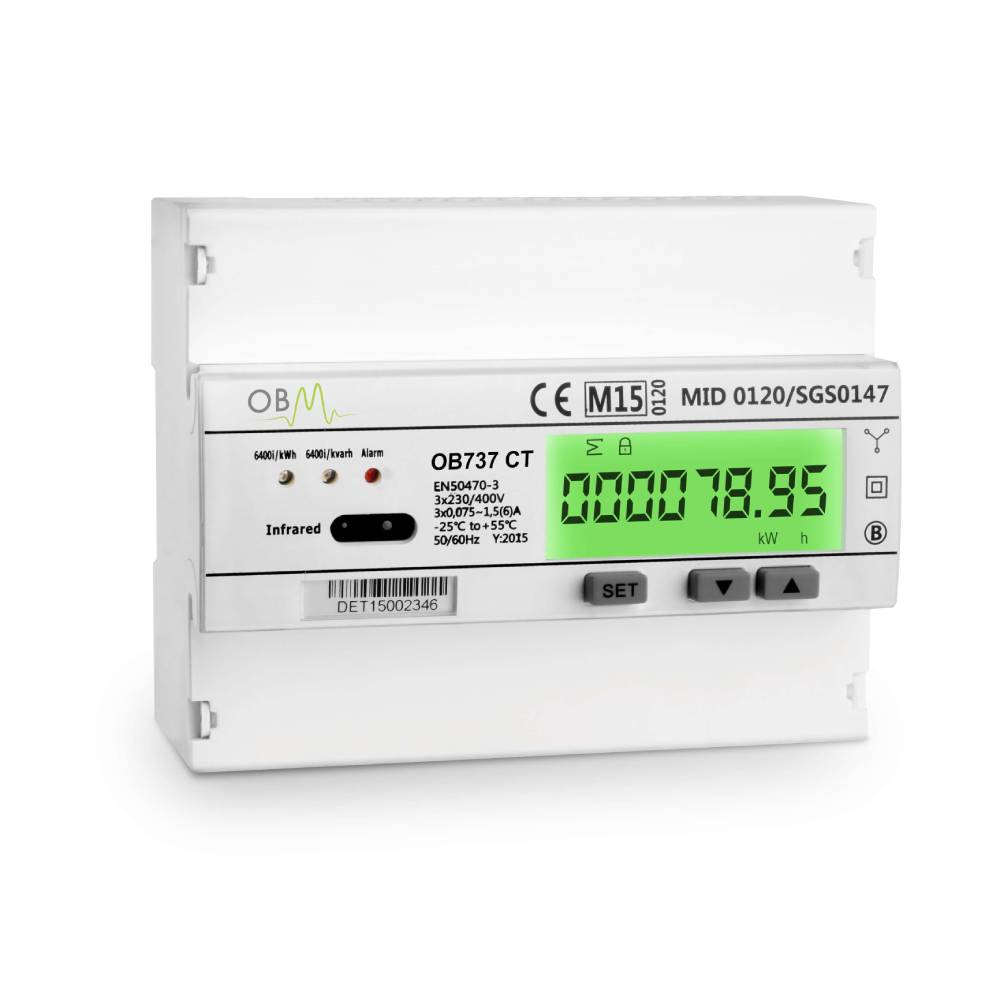
For loads exceeding the limits of direct connected meters, CT (current transformer) operated three phase meters are the standard solution for commercial and industrial installations. Rather than passing the full load current through the meter, external current transformers are fitted around the supply conductors and produce a proportional secondary current that the meter uses to calculate energy consumption in kilowatt-hours (kWh).

CT-operated meters are commonly used in commercial buildings, industrial facilities, retail developments, business parks, and multi-occupancy properties where electrical loads are too large for direct connected metering.

UK trad image
UK trad image

Rogowski Coil Meters

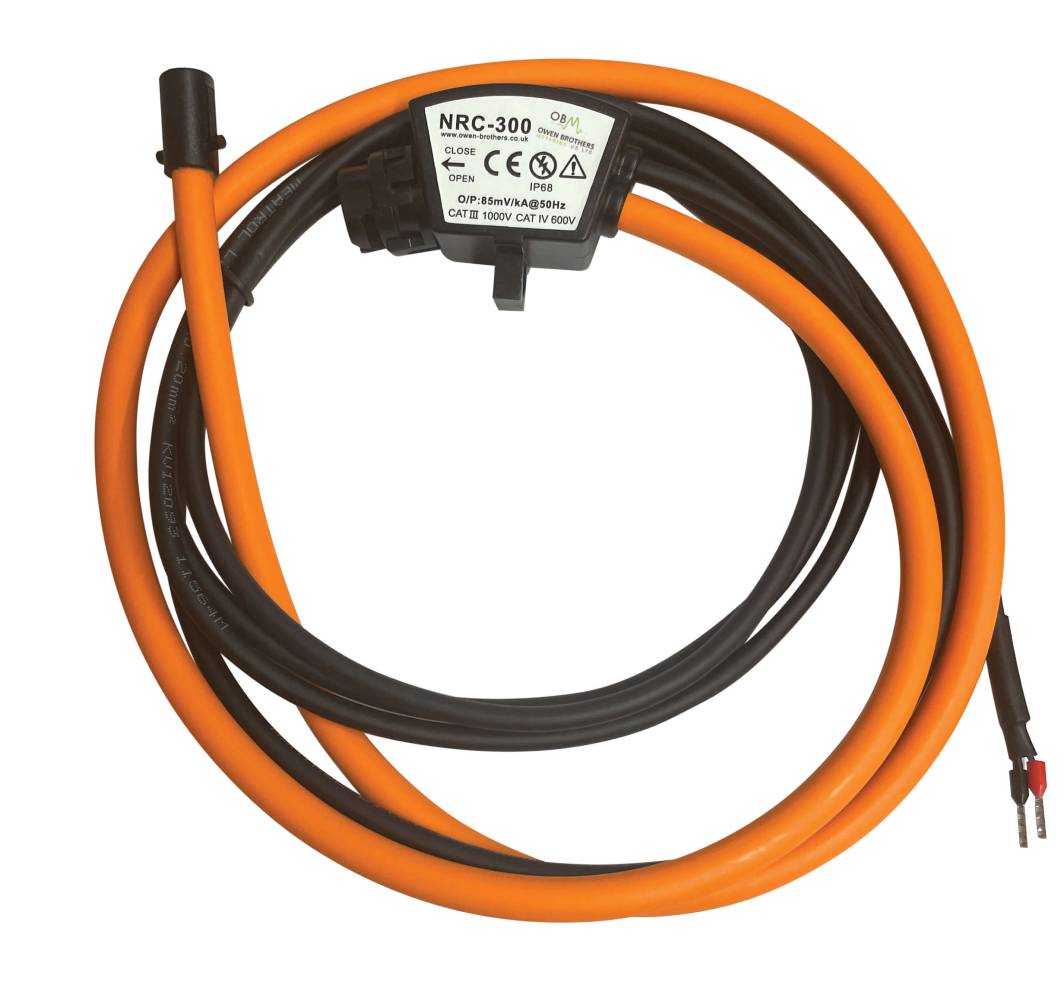
For industrial applications with high current loads, or retrofit projects where the electrical supply cannot be easily interrupted, Rogowski coil meters offer a flexible alternative to conventional current transformer (CT) metering. The flexible coil wraps around existing conductors or busbars, making installation easier in confined spaces and on existing electrical systems.

Unlike traditional CTs, Rogowski coils are lightweight, highly adaptable, and particularly well suited to energy monitoring applications involving large conductors or irregularly shaped busbars. They are commonly used in industrial facilities, commercial buildings, data centres, and energy management projects where accurate monitoring of high-current circuits is required.

MID-Approved Sub-Meters for Tenant Billing

Any sub-meter used to calculate tenant bills must hold MID approval under the European framework (Directive 2014/32/EU) that standardises the accuracy and design of measuring devices used for billing applications. MID certification confirms the meter has been rigorously tested to a defined accuracy standard and certified for commercial use.Using a non-MID meter for billing creates legal risk if a tenant disputes a charge.

Owen Brothers supply a full range of MID-approved single phase and three phase sub-meters, including CT operated, DIN rail meters and pre-payment systems for landlord applications.

UK trad image
How to Identify Your Electricity Meter Type

Smart meter: Digital display, in-home display unit, automatic readings, communications hub attached to the meter.

Economy 7 or Economy 10 meter: Two separate readings shown - one for day rate, one for night rate.

Prepayment meter: Top-up card or key, credit balance shown on display, pay-as-you-go functionality.

RTS meter: Separate switch box near the meter labelled "Radio Teleswitch", property heated by storage heaters, no gas supply. Contact your supplier immediately if this describes your installation

If you are unsure, your energy supplier can confirm your meter type.

UK Regulations for Electricity Metering

Electricity meters used for billing in Great Britain must comply with the applicable legal metrology requirements. Some meter types are approved under the Electricity Act 1989 and appear on the Register of Approved Electricity Meters maintained by OPSS. Most modern billing meters are instead approved under the Measuring Instruments Directive (MID) and carry the relevant UKCA metrology markings. MID-approved meters do not appear on the Register of Approved Electricity Meters.

For landlord and tenant sub-metering, where electricity charges are calculated from meter readings, the meter should be compliant with the applicable requirements of the Measuring Instruments directive and suitable for billing use.

Frequently Asked Questions

What are the most common electricity meter types in the UK?

Standard single-rate meters, digital meters, smart meters, prepayment meters, Economy 7, Economy 10, and RTS meters are the main utility types. For landlords and commercial properties, single phase DIN rail meters and three phase CT operated meters are most commonly used for sub-metering.

What is happening to RTS meters in 2025 and 2026?

The RTS phase out began on 30 June 2025. According to Energy UK (February 2026), around 154,000 RTS meters were still waiting replacement as of late January 2026. The phase out resumes in spring 2026. Contact your energy supplier immediately to arrange a smart meter upgrade.

Are prepayment meters more expensive than standard meters?

Often yes. Research by FreePriceCompare (2025) found that despite slightly lower standing charges, prepayment customers typically face higher unit rates and fewer tariff options, meaning bills are often higher overall compared to direct debit customers.

What is the difference between a sub-meter and a main electricity meter?

A main meter measures total consumption for a property and is supplied by your energy provider. A sub-meter is a privately installed device measuring consumption in a specific unit or area, used for monitoring or tenant billing within a multi-occupancy property.

Do I need a MID-approved meter to bill my tenants for electricity?

Yes. Under the European framework (Directive 2014/32/EU) that standardises the accuracy and design of measuring devices used for billing applications. MID certification confirms the meter has been rigorously tested to a defined accuracy standard and certified for commercial use. Any meter used to calculate tenant charges must hold MID approval. Owen Brothers supply MID-approved meters across their single phase and three phase range, including pre-payment options for HMO and multi-tenancy applications.

How can I tell what type of electricity meter I have?

Smart meters have a digital display and in-home display unit. Economy 7 and 10 meters show two separate readings for day and night. Prepayment meters show a credit balance. RTS meters have a separate switch box labelled Radio Teleswitch near the meter panel.

Trustpilot