
Smart Meters for Businesses UK 2026: Why Sub-Metering is the Better Option

If you manage a commercial property, an HMO, an industrial unit, or a multi-tenancy building in the UK, chances are you have been told to get a smart meter. Energy suppliers had an obligation to offer smart meters to all eligible small businesses by the end of 2025, and the government is now pushing towards complete rollout by 2030.

But here is the thing most people miss. A utility smart meter, installed by your energy supplier, measures total consumption for the whole building. It cannot tell you how much electricity each tenant is using. It cannot generate individual tenant bills. And it cannot help you recover energy costs from multiple occupiers.

For landlords and businesses with more than one unit or tenant, sub-metering is not just a better option. In many cases, it is the only option that actually does the job.

What Is a Utility Smart Meter for Businesses?

A utility smart meter is a second-generation digital meter installed by your energy supplier on the main incoming supply. It automatically records electricity and gas consumption and transmits readings to the supplier every 30 minutes, eliminating estimated bills and enabling time-of-use tariffs.

For UK businesses, smart meters come in two main types: SMETS2 (the current standard for smaller commercial premises) and Advanced Meters for larger industrial and commercial sites consuming above certain thresholds. Both eliminate estimated billing and open the door to time-of-use tariffs.

As of September 2025, 70% of all meters in Great Britain were smart meters. In the non-domestic sector, 64% of premises had smart or advanced meters installed as of Q2 2025.

What Smart Meters Cannot Do for Landlords and Multi-Tenancy Properties

This is a fundamental limitation that affects any landlord, property manager, or business operator with multiple tenants or cost centres. A utility smart meter cannot:

  • Measure consumption for individual flats, offices, or industrial units
  • Generate separate bills for different tenants based on actual usage
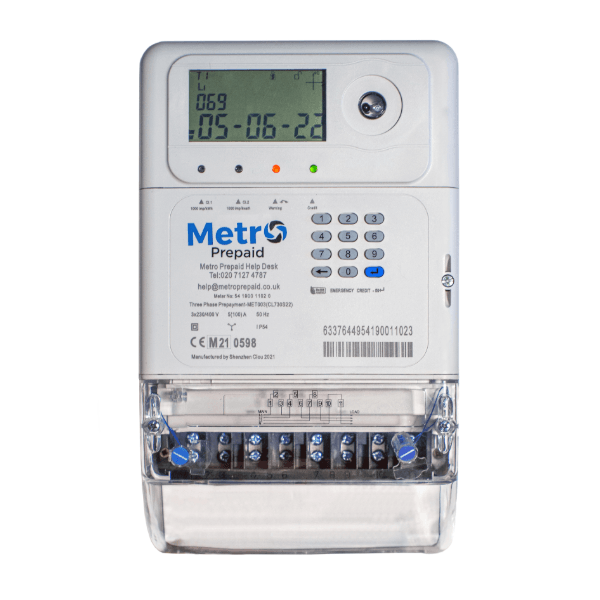
  • Provide prepayment functionality so tenants pay before they use electricity
  • Attribute energy costs to specific floors, departments, or production lines
  • Give you granular consumption data per unit for energy management purposes

For a single-occupancy property with one tenant and one supply, a utility smart meter works well. For anything more complex than that, sub-metering is what you actually need.

UK trad image

What Is Sub-Metering and How Is It Different?

A sub-meter is a privately owned, privately installed electricity meter that sits downstream of the main utility meter. It measures consumption for a specific unit, circuit, tenant, or area of a building. Sub-meters belong to you, not your energy supplier.

Sub-metering involves installing secondary meters to measure consumption of specific areas, such as tenants in multi-occupancy buildings, or equipment separate from the main utility meter. This level of monitoring is essential for large buildings, multi-tenant properties, and industrial sites.

The practical difference is significant. Where a utility smart meter tells you the building total, a sub-metering system tells you exactly what each tenant or area is using. That data is what you need to bill tenants fairly, recover energy costs accurately, and manage consumption across a portfolio of properties.

Smart Meter vs Sub-Meter: A Direct Comparison

Feature Utility Smart Meter Sub-Meter (Owen Brothers)
Who installs it? Your energy supplier You or your electrician
Who owns it? Energy supplier You (the property owner)
What does it measure? Total site consumption Individual unit or circuit
Can you bill tenants? No Yes (MID approved models)
Works in multi-unit properties? No Yes
Remote monitoring? Via supplier app Via OBmeters.com portal (4G)
Prepayment for tenants? No Yes (Metro range)
Suitable for HMOs? No Yes
MID approved for billing? N/A (supplier meter) Yes (Owen Brothers range)
Regulatory body Ofgem / energy supplier GB Measuring Instruments Regs

Note: Some categories overlap. For example, a smart meter may also operate as an Economy 7 meter or a prepayment meter. Similarly, many modern sub-meters can support multiple tariffs, remote communications, and automated meter reading functions.

Who Needs Sub-Metering in 2026?

Sub-metering is the right solution for any property or business where electricity consumption needs to be measured, attributed, or billed at a more granular level than the main incoming supply.

UK trad image

HMO Landlords

HMOs with bills included in the rent expose landlords to unlimited energy risk. When tenants know they are not paying directly for what they use, consumption rises. Property trainer and HMO expert testimony consistently shows that tenants in bills-included properties leave appliances running, use electric heaters with windows open, and consume far more than they would if paying directly.

If a single billing dispute or a year of unallocated tenant electricity consumption exceeds the investment in sub-metering, the system can quickly demonstrate its value. Sub-metering also helps eliminate the ongoing risk of tenants overusing electricity at the landlord's expense, ensuring costs are allocated fairly and accurately.

Owen Brothers: HMO and Residential Sub-Metering

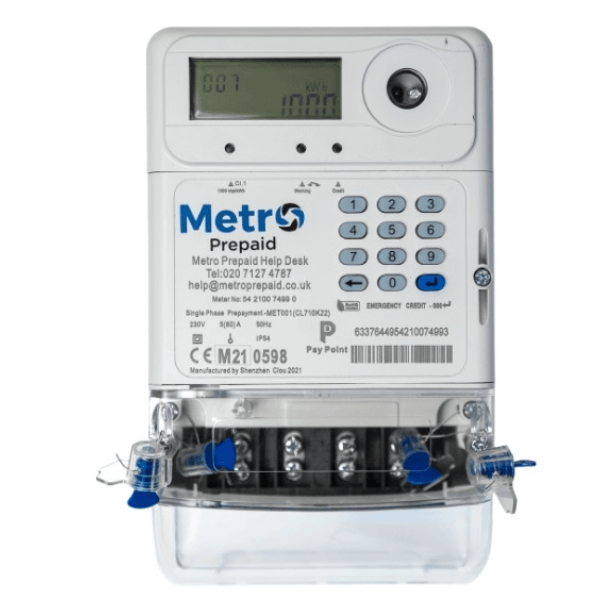
→ Metro Pre-Payment Meters for Landlords
→ Metro 80A Single Phase Pre-Payment Meter (MET001)
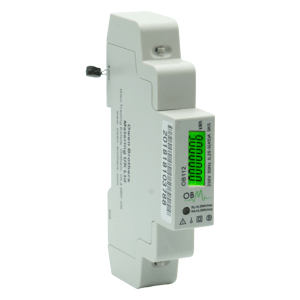
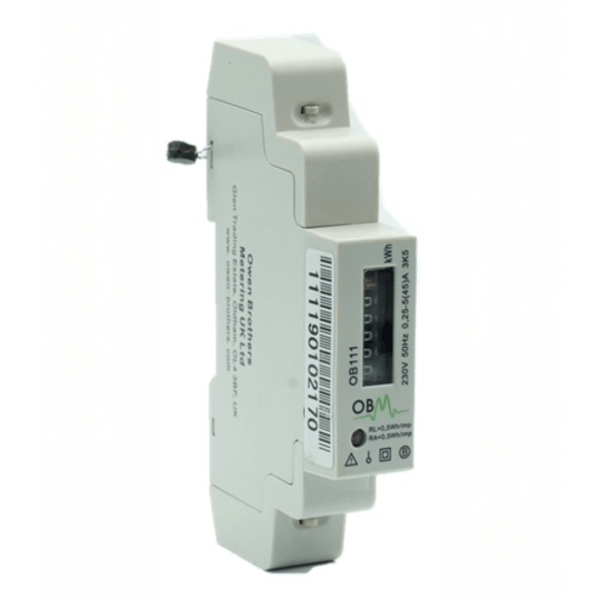
→ Single Phase DIN Rail Meters
→ OB112 45A MID Approved Digital Meter

Commercial Landlords and Multi-Tenancy Office Buildings

In a commercial building with multiple tenants on a single supply, sub-metering allows the landlord to recover energy costs from each tenant based on actual consumption rather than floor area estimates. This removes billing disputes, improves transparency, and can significantly reduce the energy costs the landlord absorbs.

An office building could sub-meter individual floors, while a factory might sub-meter each production line or process. The same principle applies to retail developments, business parks, and mixed-use properties.

Save Time, Reduce Costs, and Improve Efficiency

OBM's remote monitoring solutions remove the need for manual meter readings by automatically collecting and transmitting accurate consumption data. This reduces staffing requirements, travel costs, and administrative workload, while providing instant access to real- time information. By automating the meter reading process, organisations can lower operational costs, improve efficiency, and free up valuable resources to focus on core business activities.

Owen Brothers: Commercial Sub-Metering

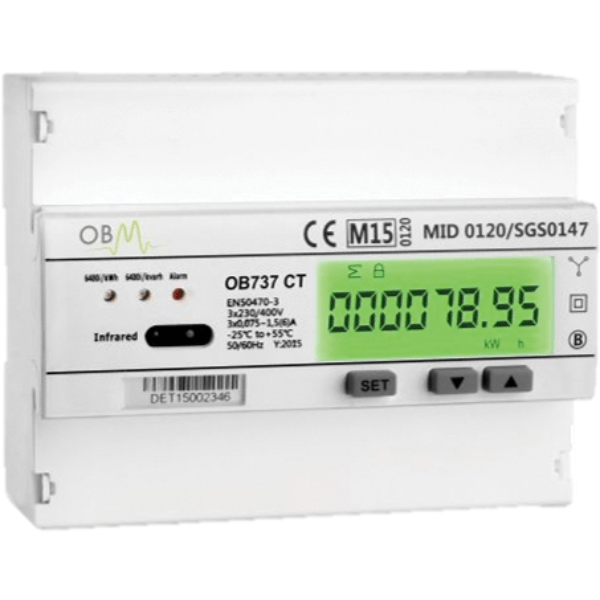
→ Three Phase CT Operated Meters
→ Three Phase Direct Connected Meters
→ Three Phase Meters in Enclosure
→ Current Transformers Range

UK trad image
UK trad image

Industrial Sites and Business Parks

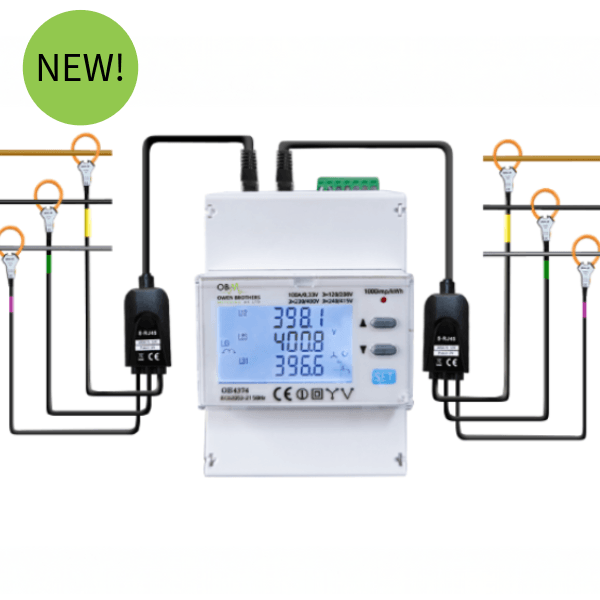
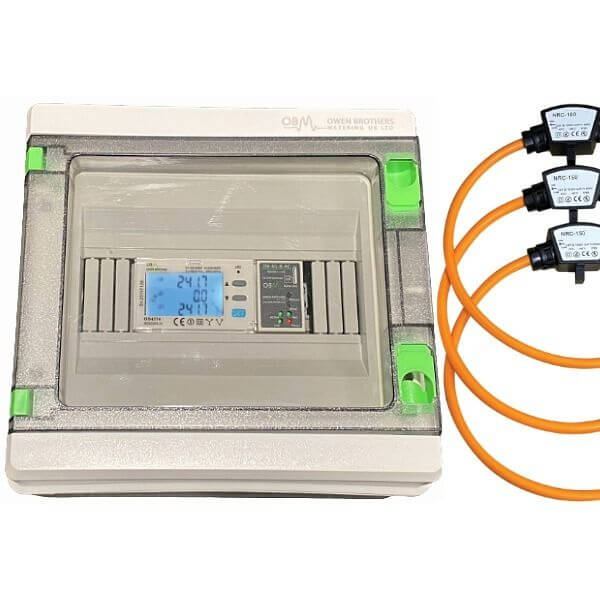
On industrial estates and business parks where multiple businesses share a main incoming supply, sub-metering is often the only practical way to divide energy costs fairly. Larger industrial loads typically require three-phase CT operated meters or, where the supply cannot be interrupted for installation, Rogowski coil meters.

Owen Brothers: Industrial Sub-Metering

→ Rogowski Coil Meters Range
→ OB4374 Three Phase Meter with Rogowski Coils in IP66 Enclosure
→ OB4373 Three Phase Rogowski Monitoring Kit with 12 Months Remote Access
→ Rogowski Coils Range
→ OB4373 CT Three Phase Online Monitoring Kit with 12 Months Remote Monitoring Access

Student Accommodation, Holiday Parks and Marinas

Properties with high turnover tenants, seasonal occupiers, or frequent changeovers benefit most from prepayment sub-metering. Tenants pay in advance, credit runs out automatically when it is exhausted, and the landlord has no exposure to unpaid bills or estimated consumption.

Owen Brothers: Prepayment Sub-Metering

→ Metro Pre-Payment Meters Range
→ Metro 80A Single Phase Pre-Payment Meter

UK trad image
UK trad image

The Legal Requirements: MID Approval for Billing

Any sub-meter used to calculate tenant bills must hold MID approval under the GB Measuring Instruments Regulations 2016, or the equivalent European framework (Directive 2014/32/EU) for installations following that standard. MID approval confirms the accuracy and design of measuring devices used for billing applications. MID certification confirms the meter has been rigorously tested to a defined accuracy standard and certified for commercial use.

MID is shorthand for the Measuring Instruments Directive. Any meter used for trade billing, which includes a landlord reselling electricity or gas to tenants, must meet that standard. A tenant can challenge a bill if the underlying meter is not approved, and the landlord has a much weaker legal basis for the charge.

Ofgem's Maximum Resale Price rules also apply. Landlords cannot charge tenants more than they pay their own supplier for the same electricity. This applies whether billing is monthly or via prepayment.

Owen Brothers: MID Approved Meters for Billing

→ Browse All Single Phase MID Approved Meters
→ Browse All Three Phase MID Approved Meters
→ OB112 45A MID Approved DIN Rail Digital Meter
→ OB111 45A MID Approved DIN Rail Analogue Meter

Remote Monitoring: Getting Smart Meter Style Data from Sub-Meters

One of the main appeals of a utility smart meter is automatic data transmission without manual readings. Sub-metering systems can now offer the same capability, without the limitations of supplier-controlled infrastructure.

Owen Brothers offer our 4G industrial grade modem with multi network enabled SIM, which attaches to compatible sub-meters and transmits readings wirelessly to the OBmeters.com online portal, enabling the user to gain visibility of energy consumption and electrical performance across a single site or an entire property portfolio from any laptop, tablet, or smartphone. OBM's remote monitoring solutions provide regular automated updates on key metrics including consumption, voltage, current, power factor, active and reactive energy, demand levels and other critical operational data.

This means, for example, a landlord with 20 HMO rooms, a business park operator with 15 units, or a facilities manager with meters across multiple commercial sites can access all consumption data from a single dashboard, without visiting any property.

Owen Brothers: Remote Monitoring

→ Remote Monitoring Overview
→ OBM-LoRa Wireless Monitoring Units
→ OB4373 Rogowski Monitoring Kit with 12 Months Remote Access
→ OB4373 CT Three Phase Online Monitoring Kit with 12 Months Remote Monitoring Access

UK trad image

What the 2026 Regulatory Changes Mean for Businesses

Two significant regulatory changes are affecting UK commercial metering in 2026 and beyond.

Market-Wide Half-Hourly Settlement (MHHS)

From October 2025, migration of all electricity meter points to the MHHS Target Operating Model began, with completion expected by mid-2027. Under MHHS, every electricity meter will eventually settle based on actual half-hourly consumption rather than estimated profiles. For businesses, this means energy prices will increasingly reflect when you use energy, not just how much.

From December 2026, all metering types must submit half-hourly data to Ofgem. Businesses still on legacy meters will need to upgrade to smart or AMR meters to gain the full benefits of this reform.

Smart-Contingent Contracts from January 2027

From 1 January 2027, energy suppliers must communicate clearly to all non-domestic customers that they will need a smart or advanced meter to enter into or renew a fixed-term energy contract. While businesses are not yet legally forced to accept a smart meter, resisting the switch will increasingly limit tariff choices.

What This Means for Multi-Tenancy Property Owners

A utility smart meter on the main supply still cannot tell you what each tenant is using. The MHHS and smart-contingent contract changes affect how you are billed by your energy supplier. They do not replace the need for sub-metering to bill tenants, manage individual unit consumption, or recover energy costs from multiple occupiers.

Frequently Asked Questions

Can a utility smart meter replace sub-meters in a multi-tenancy property?

No. A utility smart meter measures total consumption at the main supply point. It cannot measure individual unit consumption, generate tenant bills, or support prepayment for multiple occupiers. Sub-meters are a separate, additional requirement for any property with more than one tenant.

Do I legally need MID approved meters to bill my tenants?

Yes. Under the GB Measuring Instruments Regulations 2016, any meter used to calculate a tenant charge must hold MID approval. Owen Brothers supply MID-approved meters across their full single phase and three phase range.

What type of sub-meter do I need for an HMO?

For most HMO rooms and residential units, a single phase DIN rail meter (direct connected) is sufficient for loads up to 100A. For properties where you want tenants to pay in advance, Owen Brothers' Metro pre-payment meters are widely used across HMOs and student accommodation in the UK.

Can sub-meters transmit readings automatically like a smart meter?

Yes. Owen Brothers' 4G remote monitoring solution attaches to compatible sub-meters and transmits readings wirelessly to the OBmeters.com online portal. This gives landlords and facilities managers real-time consumption data across all their meters without visiting any property.

What are the Maximum Resale Price rules for landlords?

Ofgem's Maximum Resale Price rules, set under the Electricity Act 1989, mean you can only charge tenants the same rate per unit that you pay your own energy supplier. You cannot profit from reselling electricity. This applies whether you bill monthly or use a prepayment system.

Is it worth sub-metering a small HMO?

Yes, in most cases. If a single billing dispute or a year of unallocated tenant electricity consumption exceeds the investment in sub-metering, the system can quickly demonstrate its value. Sub-metering also removes the ongoing risk of tenants overusing electricity at the landlord's expense.

Trustpilot