
Three-Phase Electric Meters: What They Are, Who Needs One and What It Costs in the UK

Three-phase electricity supplies have traditionally been associated with commercial and industrial premises, where higher power requirements make them more suitable than a standard single-phase supply.

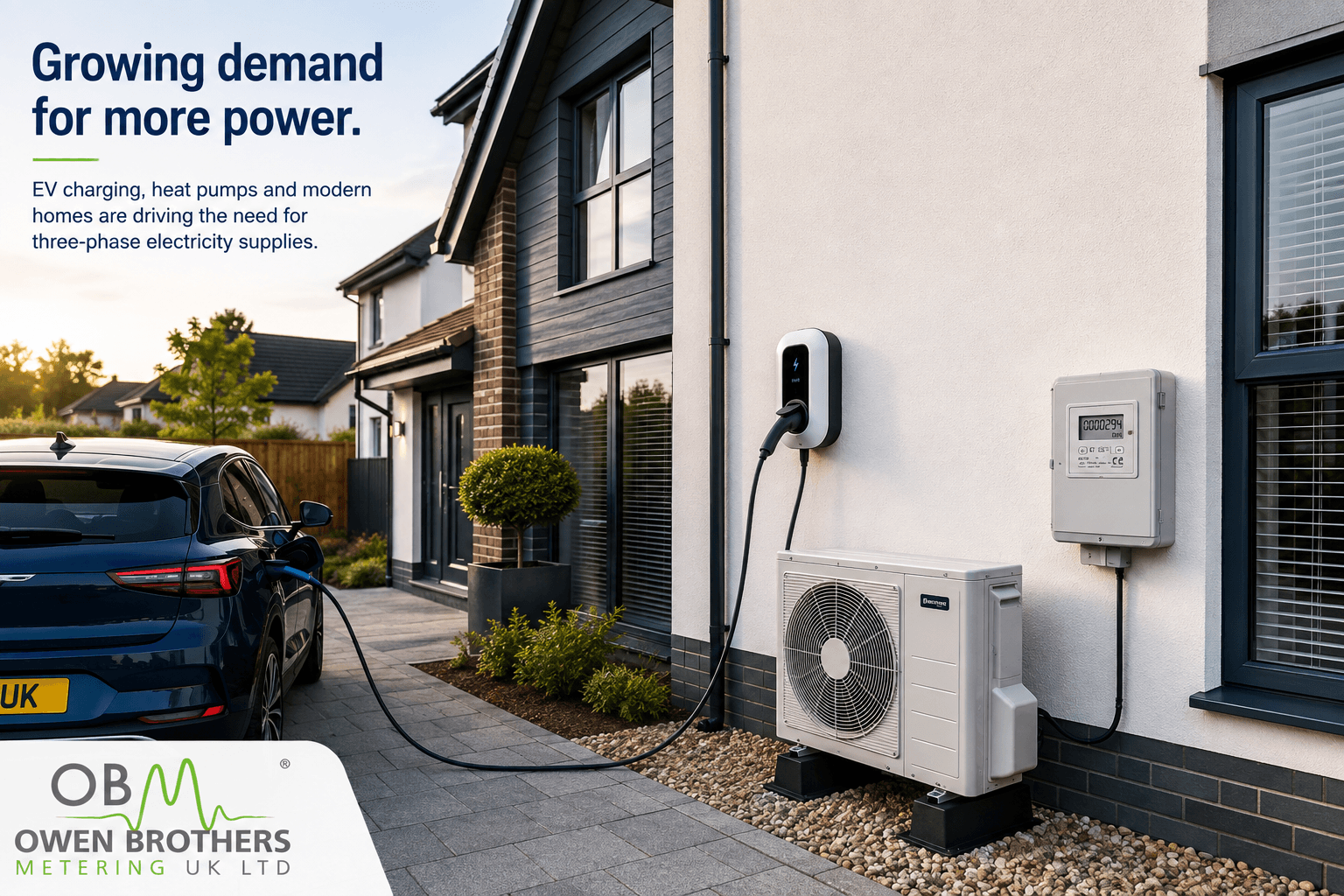
However, three-phase supplies are becoming increasingly relevant in other applications too. Higher-powered EV chargers, heat pumps, larger solar PV and battery installations, as well as properties converted from commercial use, can all create a requirement for three-phase power.

If you already have a three-phase supply, or are considering upgrading to one, it is important to understand how three-phase metering works, the different types of meters available and which option is suitable for your application.

UK trad image

How Does a Three-Phase Electricity Supply Work?

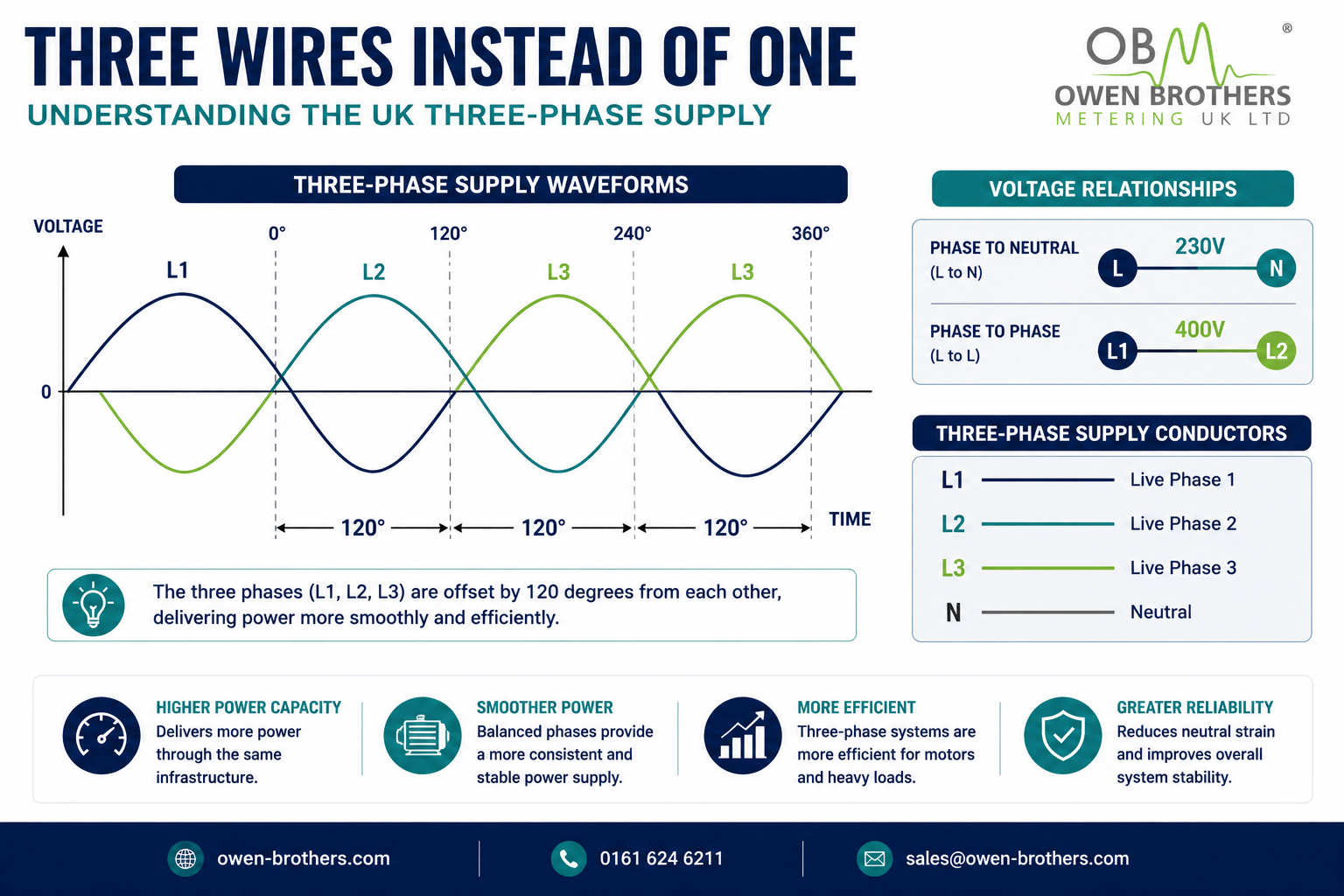
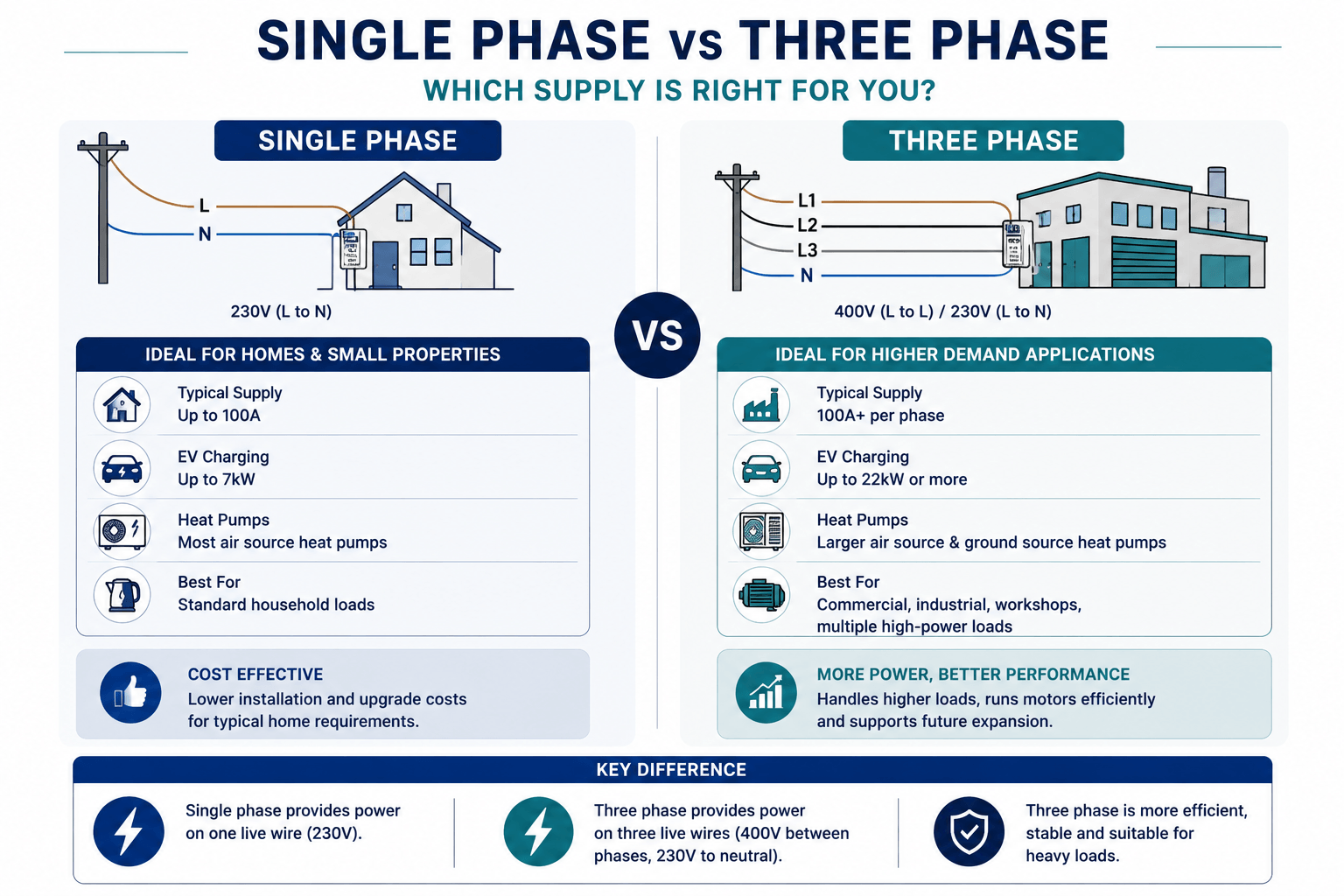
A standard UK single-phase supply uses one live conductor and a neutral, providing a nominal 230V supply. A three-phase supply uses three live conductors, usually labelled L1, L2 and L3, together with a neutral.

Each phase is offset by 120 degrees, allowing power to be distributed more evenly across the supply. Voltage between a phase and neutral is nominally 230V, while voltage between phases is approximately 400V.

How Does a Three-Phase Electricity Supply Work? image
Direct Connected vs CT Operated Three-Phase Meters image Direct Connected vs CT Operated Three-Phase Meters image

Direct Connected vs CT Operated Three-Phase Meters

A three-phase electricity meter measures energy consumption across all three phases. The type of meter required will depend largely on the current being measured and the application.

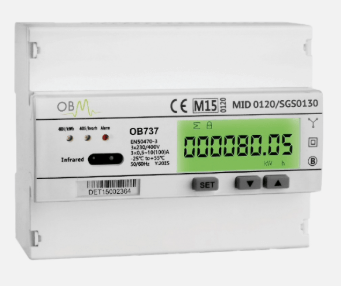
For supplies up to the rated capacity of the meter, a direct-connected meter can be used, with the load current passing directly through the meter terminals. Owen Brothers offers direct-connected three-phase meters rated up to 100A per phase.

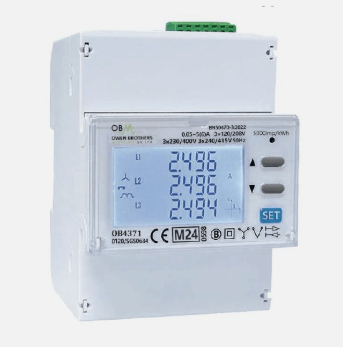
For higher-current applications, a CT operated meter is normally used. Current transformers (CTs) are fitted around the conductors and provide a reduced secondary current, typically 5A or 1A, which the meter uses to calculate consumption. The correct CT ratio must be selected or programmed into the meter to ensure accurate readings.

Where space is limited, conductors are particularly large, or installation around existing busbars is difficult, Rogowski coils can provide a flexible alternative to conventional CTs.

Do I Need a MID Approved Three-Phase Meter?

For general energy monitoring, the primary requirement is usually selecting a meter with the appropriate accuracy and functionality for the application. Where meter readings are being used to calculate charges for electricity consumption, additional requirements apply.

For landlord and tenant sub-metering applications, a MID approved meter provides a certified measurement standard suitable for billing purposes. Owen Brothers stocks a wide range of MID approved three-phase meters for direct-connected and CT operated applications.

Where electricity is resold to tenants, landlords should also be aware of Ofgem's Maximum Resale Price requirements.

When Is a Three-Phase Supply Required image

When Is a Three-Phase Supply Required?

Three-phase supplies are common in commercial and industrial premises, particularly where machinery, motors, lifts, commercial HVAC equipment or other higher electrical loads are installed.

For residential properties, a standard single-phase supply will generally be sufficient. However, three-phase may be considered where significantly higher loads are required, for example multiple EV chargers, 22kW three-phase EV charging, larger heat pump systems, or substantial solar PV and battery installations.

Homes are where the calculation has changed. A 100-amp single-phase supply comfortably runs a normal household, including a 7kW car charger and most heat pumps. The case for three phase appears when demand genuinely stacks up: charging at 22kW rather than 7kW, ground-source or larger heat pumps, multiple electric vehicles, or solar and battery systems big enough to strain a single phase. Electricians report the request becoming routine rather than rare, though many will honestly advise that an uprated single-phase supply is the cheaper answer for most households.

Getting connected, and what it costs

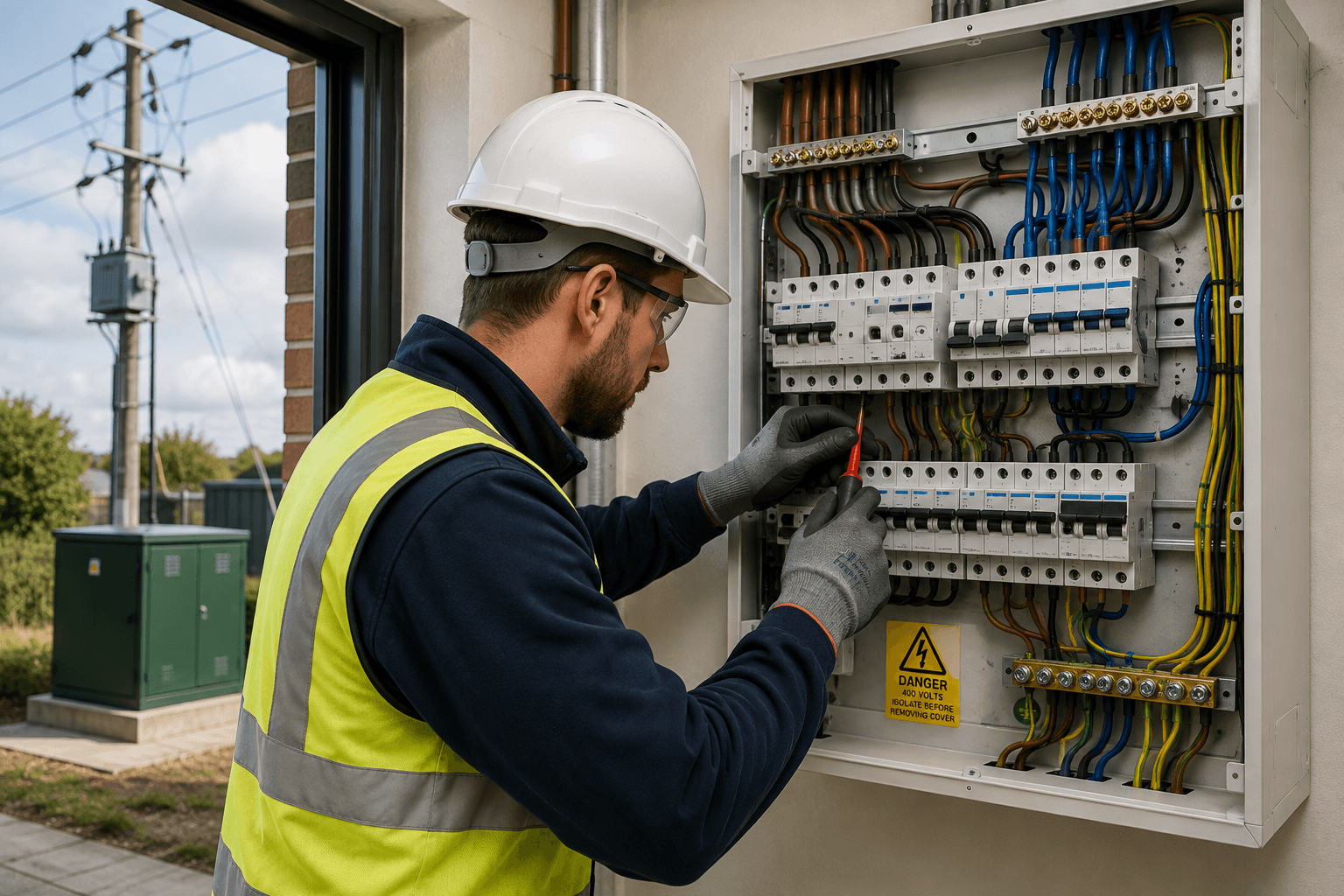
The supply itself belongs to neither the homeowner nor the energy supplier but to the regional distribution network operator, and it is the DNO that assesses, quotes for and carries out an upgrade from single to three phase. The wiring on the customer’s side of the meter, including a new three-phase distribution board, is the work of a qualified electrician working to BS 7671, and most electricians will handle the DNO application as part of the job.

The cost of upgrading from single phase to three phase varies considerably depending on the existing network infrastructure and the work required. Your local Distribution Network Operator (DNO) will assess the property and provide a quotation for the supply upgrade.

Additional work may also be required on the customer's side of the supply, such as upgrading the distribution board and associated electrical equipment. A qualified electrician can advise on these requirements and, where necessary, assist with the DNO application.

For an accurate cost, we recommend obtaining a site-specific quotation from your DNO and electrical contractor.

Getting connected, and what it costs image
Three-Phase Meters with Remote Monitoring imageRemote Monitoring image

Three-Phase Meters with Remote Monitoring

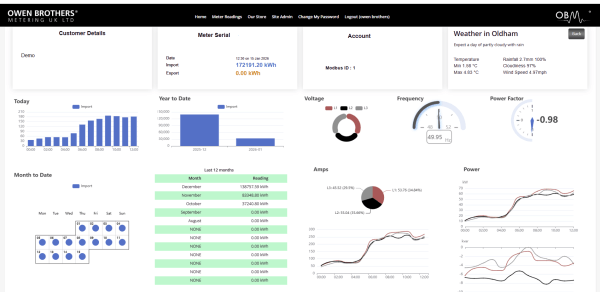
Modern three-phase sub-meters can provide much more than a local kWh reading. Meters equipped with communication outputs such as Modbus RS485 can be connected to remote monitoring systems, allowing consumption data to be accessed online.

This can be particularly useful for landlords, facilities managers, energy managers and businesses that need to monitor individual buildings, tenants, equipment or electrical circuits.

Owen Brothers supplies three-phase remote monitoring solutions using 4G, Ethernet and long-range wireless communications, with options for direct-connected, CT operated and Rogowski coil metering.

Choosing the Right Three-Phase Meter

Owen Brothers Metering UK has specialised in electricity metering since 1953, supplying metering equipment for commercial, industrial, landlord, renewable energy and energy management applications.

Our three-phase range includes:

  • Direct-connected three-phase meters
  • CT operated three-phase meters
  • Rogowski coil meters
  • Panel mounted meters
  • Pre-wired metering kits and enclosures
  • Remote monitoring solutions

If you're unsure which meter is suitable, contact our team with details of the supply, maximum current and what you need to measure. We can advise on the appropriate meter, CTs or Rogowski coils and, where required, a suitable remote monitoring solution.

Choosing the Right Three-Phase Meter image

Frequently Asked Questions

How do I know if my property has a three-phase supply?

Look at the incoming service near your main fuse: a single-phase supply has one fuse and two conductors, while a three-phase supply arrives on three live conductors plus a neutral, usually with three fuses or a three-pole cut-out. On the meter side, 400 volts on the nameplate is a giveaway, since that line-to-line voltage only exists on a three-phase supply. If in doubt, a qualified electrician can confirm it in minutes.

What is the difference between a direct-connected and a CT-operated three-phase meter?

A direct-connected meter carries the full load current through its own terminals and serves supplies up to 100 amps per phase. Above that, current transformers clamp around each conductor and scale the current down to a small secondary signal, typically 5 amps or 1 amp, which the meter reads instead. The transformer ratio must be programmed into the meter, or every reading will be wrong by the same consistent factor.

Do I need an MID-approved three-phase meter to bill my tenants?

Yes. Any meter used for billing in Great Britain should be of an approved pattern under Schedule 7 of the Electricity Act 1989, and for sub-meters that generally means MID certification under the Measuring Instruments Regulations 2016. Under Ofgem’s Maximum Resale Price rules, you should not charge tenants more than you pay your own supplier.

How much does it cost to upgrade from single phase to three phase?

There is no single figure, because the price is set by your regional distribution network operator after a site assessment. Contractors commonly quote £2,000 to £4,000 for straightforward conversions, Electricity North West publishes an average of £5,370 for an 80-amp-per-phase upgrade, and jobs needing new cable or road works can pass £10,000. Establish your real demand first, then request a quote.

Can a three-phase meter be remotely monitored?

Yes. Many three-phase meters with a Modbus RS485 communication output can be connected to a remote monitoring system, allowing energy usage and other electrical data to be viewed online rather than relying on manual meter readings.

Owen Brothers offers a range of three-phase meters suitable for remote monitoring, including direct-connected, CT operated and Rogowski coil options. We can also supply complete pre-wired metering and monitoring kits, with the meter, CTs or Rogowski coils, modem and associated equipment housed within a suitable enclosure.

Depending on the installation, data can be transmitted using 4G, Ethernet or wi-fi. Multiple Modbus meters can also be linked together via RS485 and connected back to a single communications gateway, making this particularly useful for larger installations with several meters.

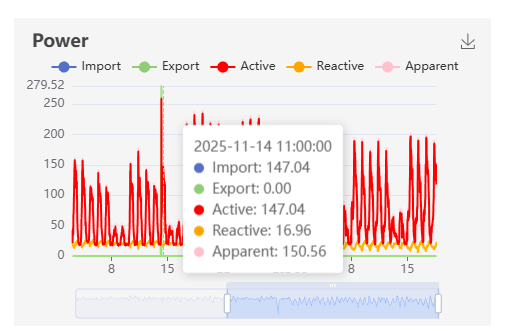
Once connected, users can view information such as energy consumption, voltage, current, power factor and power, depending on the meter type, as well as monitor usage across individual buildings, tenants, equipment or circuits.

Trustpilot